
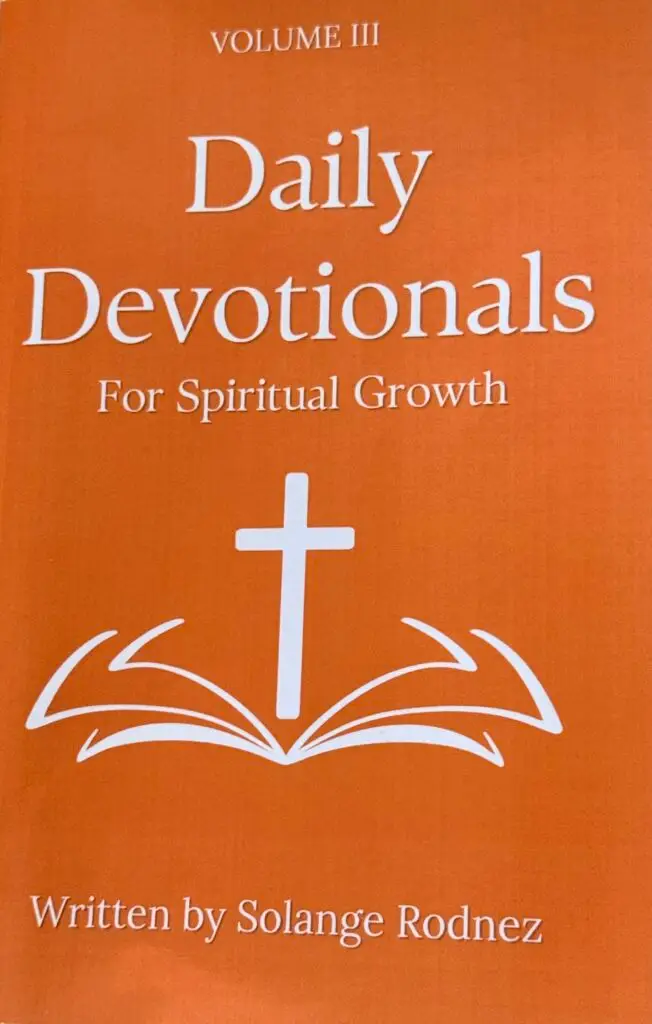
By Solange Rodnez
Solange Rodnez is a retired registered nurse who has decades of experience teaching Sunday School lessons, Bible studies, and women’s groups. She wrote Daily Devotional as part of her time with God, studying the Word and sharing teachings on her daily prayer time.
You can purchase copies of these devotionals on Amazon at: https://www.amazon.com/
Please support her work so that she can continue producing Godly content to encourage and support your Spiritual growth.
Ephesians 1:16-20 – I have not stopped giving thanks for you, remembering you in my prayers. I keep asking that the God of our Lord Jesus Christ, the glorious Father, may give you the Spirit of wisdom and revelation so that you may know him better. I pray also that the eyes of your heart may be enlightened in order that you may know the hope to which he has called you, the riches of his glorious inheritance in the saints, and his incomparably great power for us who believe. That power is like the working of his mighty strength, which he exerted in Christ when he raised him from the dead and seated him at his right hand in the heavenly realms.
As I reflect on this passage, it provides a fresh perspective on how to approach prayer on behalf of others. The Apostle Paul offered a prayer of intercession for the believers in Ephesus, reminding them that he constantly lifted them up in prayer. He did not merely pray for their material needs or immediate concerns. Instead, his intercession focused on their spiritual growth, wisdom, and deeper understanding of God. He prayed that they would know God more intimately, not just know about Him, but have a personal relationship with Him. He desired that they would understand God’s power, greatness, and attributes, and live in wisdom, knowledge, and understanding, growing in their faith.
When we study and meditate on Scripture, the Holy Spirit illuminates our hearts, teaching us how to obey God’s Word and conform to the likeness of Christ. An effective intercessory prayer requires a heart that is fully surrendered to God, seeking His mercy and grace for both ourselves and others. To be effective in intercessory prayer, I would like to highlight three key principles.
The first principle is to make our prayers God-centered. Too often, our prayers focus on our personal needs and desires rather than presenting ourselves to God as a living sacrifice, holy and pleasing to Him. While it is good to bring our requests before God, our primary focus should be on worshiping Him for who He is, not just for what He can do for us. God delights in those who humbly recognize His worthiness of praise, worship, and adoration before anything else. Jesus taught us that the first step in prayer is to glorify God. Worship begins with seeing and knowing God. Psalm 95:6 says, “Come, let us bow down in worship, let us kneel before the Lord our Maker.” Before presenting our requests, we should approach God with a heart full of thanksgiving and reverence.
The second principle is to make our prayers overflow with praise. PsaIm l00:2 says, “Worship the Lord with gladness; come before him with Joyful songs.” Many times, we enter into prayer out of desperation, immediately listing our concerns and struggles. However, our first step should be to praise God before bringing our needs before Him. God already knows our struggles and sees our pain, but He desires that we trust Him completely. When we come before Him with a heart full of worship and praise, we demonstrate faith in His divine plan. Rather than demanding immediate answers, we should wait patiently for His deliverance, knowing that He knows all things, sees every detail of our lives, cares deeply for us, and is always on time.
The third principle is to make our prayers filled with confidence. When we pray, we should have full confidence that God hears and answers prayer. We should expect something good to happen, even if we do not see immediate results. During a prayer meeting, I listened to a woman interceding on behalf of three friends who were going through difficult times. Her voice carried deep compassion and love, and she boldly cried out for mercy, interceding with confidence that God would answer according to His will and purpose. This is the kind of boldness and trust that should mark our intercessory prayers. James 5:16 reminds us, “Therefore, confess your sins to each other and pray for each other so that you may be healed. The prayer of a righteous person is powerful and effective.” When we pray on behalf of others, we can be certain that God listens to the cries of the righteous, He responds according to His perfect will, and prayer has the power to change lives.
Intercessory prayer is a powerful act of faith, standing in the gap for others and trusting that God will intervene. When we pray with a God-centered heart, a spirit of worship and praise, and a bold and confident faith, we can be certain that our prayers will reach the heart of God. Let us be faithful intercessors, lifting up our loved ones, our communities, and all who need to trust in God’s power and grace. Hebrews 4:16 encourages us, “Let us then approach the throne of grace with confidence, so that we may receive mercy and find grace to help us in our time of need.”
Your Application